Text by Rosemary Jann; photos by Barbara Saffir

The City Nature Challenge is now complete for 2026, and the final results are impressive, showing solid increases over 2025 totals. This year the CNC, a global bioblitz that seeks to measure urban biodiversity, included 754 metropolitan areas in 61 countries across six continents during the four-day observation period from April 24-27. World-wide, 106,354 observers submitted 3,001,825 observations to iNaturalist during the event. Participants have documented at least 76,422 species, with the assistance of 27,642 individuals who helped identify observations.
The Washington DC Metropolitan area made an impressive showing in all 4 categories: CNC DC was #3 for observers (2,275), #4 for identifiers (1,614), #6 for observations (65,502), and #9 for species (3,719). Data from the ARMN Observations Project to which many ARMN members contribute, provide a more focused spotlight on what we accomplished locally. During the CNC event, 79 Project members identified 1103 species and contributed 6519 observations—an increase of more than 900 over last year. Individuals may automatically share local iNaturalist observations with this project by clicking on the Projects tab and selecting the ARMN Observations Project from the list.
Complete results for the 2026 City Nature Challenge and for previous years are available at https://www.citynaturechallenge.org/2026-final-results.
Across Northern Virginia, Arlington Regional Master Naturalists participated in various group events during CNC weekend. At Barcroft Park, Park Steward Marion Jordan welcomed a diverse group that included veteran ARMN members, a couple new to the CNC, and a family of former neighbors who brought their grade school children back again this year. Their daughter, a budding entomologist, made sure that the group focused on nature both small (slugs on mushrooms) and large (Barcroft’s towering trees).
Bill Browning welcomed a group of ten to Powhatan Springs Park. They included some new ARMN members and their children, who were especially fascinated by the fox den on the property. At Lubber Run Park, seven ARMN members joined Park Steward Stephanie Martin and Caroline Haynes for a nature foray. The group was excited to locate an early lowbush blueberry as well as a basswood tree that Stephanie had not noticed before. They also identified feather and lesser smooth cap mosses. This was a good year for galls, which they found on black cherry, witch hazel, hickory, and tupelo leaves.
Soup Fick, program manager at Winkler Botanical Preserve, welcomed ARMN members to “Winkler Walkabout” led by their Roving Naturalist, Meghan Rohr. About a dozen people investigated the impressive diversity of the Preserve. Among the finds spotted by Ginny McNair were two kinds of beardtongue penstemon perennials and a black cherry tree completely defoliated by tent caterpillars. Despite the damage they can do to trees, tent caterpillars also provide a vital food source for chickadee hatchlings, and after the caterpillars die, the tree has time to send out new leaves before summer. Together they illustrate the interdependent web of biodiversity at work in our natural areas.
CNC weekend closed out with a “Nocturnal Naturalists” night walk at Bull Run Regional Park, sponsored by Capital Nature and hosted by NOVA Regional Parks. The group set up a mothing station and used UV lights to spot critters in the dark.

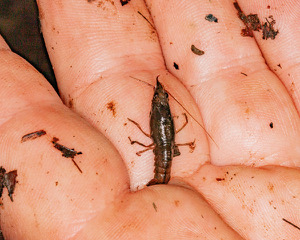
ARMN member Barbara Saffir chronicled the group’s many finds, including crayfish, spotted salamanders, American toads, tiger moths, spiders with egg sacks, and a dazzling array of other insects.


Thanks to everyone who participated in the City Nature Challenge this year and helped it achieve two important goals: not just providing a wealth of data for scientific research but also encouraging people to get out outside to learn about and celebrate the wildlife that thrives around us, even in the heart of our cities.
Discover more from Arlington Regional Master Naturalists
Subscribe to get the latest posts sent to your email.