A Spooky Season Guide to Virginia’s Flora & Fauna
by Laura Gilmore
October is the season of ghosts, witches, skeletons, spiders, and things that go bump in the night. But before we fill our yards with plastic skeletons and carved pumpkins, let’s take a walk outside. You might discover that nature has been putting on its own Halloween display all along.


This mushroom has been waiting all year for Halloween! The
jack-o’-lantern mushroom (Omphalotus illudens) has a brilliant orange color during the day. Image by Migueldel Fuego 1029, 5 September 2022. CC BY-SA 4.0.
But at night is when it truly shines. Literally, since under the right conditions,
portions of the mushroom can produce a faint greenish glow thanks to bioluminescence. Image by Tylerbrunnermyco, North Carolina, 12 August 2023. CC BY-SA 4.0.


A ghostly white plant emerges from the forest floor. A mushroom looks like a cluster of dead fingers reaching up from the ground. A tiny wasp turns an aphid into a mummy. A spider wears a suit of armor that looks like a skull. And somewhere overhead, a bat emerges at dusk to hunt insects.
Some of these organisms are toxic. Some are harmless. Some are essential decomposers, pollinators, predators, or prey. And some simply happen to have names that sound like they were inspired for a Halloween party. The spooky names are an invitation to look closer, and what we discover is often far more fascinating than the name suggests.
Ghosts & Apparitions
Ghost Pipe
Few plants have a more appropriate name for spooky season than ghost pipe (Monotropa uniflora). Ghost pipe is found throughout Virginia, blooming from June through October, and it has an especially timely claim to fame: the Virginia Native Plant Society selected ghost pipe as its 2026 Wildflower of the Year.


Ghost pipe flowers observed during a BioBlitz at Bull Run Mountains Preserve. Images by Laura Gilmore, 30 May 2026.
This unusual woodland plant emerges from the leaf litter, usually after summer or fall rainfall, looking almost translucent. Without the chlorophyll that gives most plants their green color, ghost pipes cannot photosynthesize. Instead, it obtains nutrients through a fascinating symbiotic relationship with another parasitic plant: a fungus that relies on fallen leaf mold, which connects the ghost pipe to the roots of nearby trees so that they can both feed off the sugars that come from the tree.

Although recent digital ethnobotany reports humans consuming ghost pipe in tincture form and for pain management, ghost pipes’ delicate stems are best left where they emerge. So, if you encounter one this fall, take a moment to admire it but don’t pick it.
Ghost Moths
The name ghost moth sounds like a Halloween decoration, but moths like these are simply part of the enormous diversity of nighttime insects around us. Although moths are often overshadowed by their colorful daytime butterfly relatives, they play important roles as pollinators, herbivores, and prey for birds, bats, and other animals. These moths emerge and are briefly active from June to August.
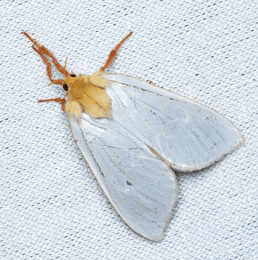

The European male ghost moth (Hepialus humuli) pictured in Denmark, 24 June 2026, CC-BY-4.0 (left); contrasted to American silver-spotted ghost moth, Photo 205287323, uploaded to iNaturalist by ryanli, West Virginia, June 2022. CC BY-NC 4.0 (right).
Although the ghost moth species found in Virginia—the silver-spotted ghost moth (Sthenopis argenteomaculatus)—lacks bright white wings, males get the name “ghost moth” from their unique hovering display flights (regardless of wing color). They rise and fall slowly over open ground at dusk looking like floating ghosts to attract females, often gathering together in groups called leks. All ghost moth males, as well as other species that have specialized scent organs, release pheromones in a lek to attract females.
Atlantic Ghost Crab
Even ghosts need a good beach vacation.
The Atlantic ghost crab (Ocypode quadrata) is a pale, fast-moving crab found along the Atlantic coast. Primarily active at night, these crabs can disappear into burrows in the sand with surprising speed.

While Atlantic ghost crabs aren’t a Northern Virginia species, they are part of Virginia’s coastal natural heritage, and a fun reminder that Virginia’s spooky cast extends from the mountains to the ocean. These crabs are active on coastal beaches in Virginia from spring through autumn (typically May through November) and hibernate in deep burrows during the winter months.
Barn Owls & Other Night Flyers
Few animals embody the ghostly aesthetic quite like the American barn owl (Tyto furcata). Barn owls received their name because they frequently choose human-made agricultural structures especially barns, old outbuildings, and church steeples as their preferred places to roost and nest. With a pale, heart-shaped face and largely nocturnal habits, a barn owl gliding silently across a field can seem almost supernatural. Their call is no less eerie. Rather than the expected hoot, their screech is a drawn-out grating shriek or hissing scream that lasts about 1 to 2 seconds and has been compared to a ghost or a person screaming in terror.

And then there are the bats! Big brown bats (Eptesicus fuscus) are among the nocturnal mammals that help keep insect populations in check in Northern Virginia. Far from being creatures to fear, bats are an important part of healthy ecosystems, and their nighttime hunting makes them some of our most effective natural pest controllers.

Witches & Devils
Witch Hazel
While many of our trees are dropping their leaves and preparing for winter, the native witch hazel (Hamamelis virginiana) is just getting started. Its unusual yellow flowers appear in late fall, often after the leaves have fallen. The narrow, twisted petals look almost like tiny yellow spiders hanging from the branches.
And witch hazel has another “scary” surprise. After flowering, its woody seed capsules mature and eventually split open, forcibly ejecting their seeds. The mechanism is so dramatic that the capsules can make a snapping sound as they open. Don’t be embarrassed if you fall for the jump scare!

Witch’s Hat
This fungus read the spellbook! The witch’s hat mushroom (Hygrocybe conica), also called the blackening waxcap, looks remarkably like a tiny witch’s hat poking from a meadow or grassy woodland edge. It appears consistently in Virginia across the summer months and peaks into autumn as moisture levels rise and temperatures cool. Appearing in shades of yellow, orange, and red, its cap and stem gradually turn black with age or when bruised, almost as if the mushroom is being magically scorched. With an unclear edibility status, this fungus is suspected of being mildly poisonous and causing adverse effects.

Devil’s Walkingstick
Devil’s walkingstick (Aralia spinosa) is covered in sharp spines along its trunk and branches. Its enormous compound leaves can make it look almost tropical, while its berries contain the toxin araliin (concentrated in the seeds) which can cause gastrointestinal upset in humans. Despite its intimidating appearance, devil’s walkingstick is a valuable native plant. Its flowers attract pollinators, and its fruits, which appear in late August through October, are a major food source for migrating songbirds and other wildlife.


Devil’s Darning Needle
Virgin’s bower (Clematis virginiana) is a beautiful native vine found in woodlands, forest edges, and other habitats throughout the region. Yet one of its common names is considerably more sinister: devil’s darning needle.
The vine’s beautiful flowers bloom from July to September, but after flowering concludes (usually from August through October), female plants develop feathery, plume-like seed heads. The common name refers to these long, curved, needle-like styles and the silky tails attached to its seeds, and Appalachian folklore offered a much darker explanation, telling of the Devil using those needle-like structures to sew the mouths of naughty children shut at night.


Clematis virginiana with young infructescense (left) and with mature fruit (right) by Gilles Ayotte, Bibliothèque de l’Université Laval, CC BY-SA 4.0.
The Black Witch
The black witch moth (Ascalapha odorata) is one of the largest moths found in North America and occasionally is spotted in Virginia during the late summer and early fall, driven by tropical storms and seasonal migration. Its dark brown wings can stretch several inches across, and its common name has inspired centuries of folklore. In some cultures, the moth has been associated with death or bad luck. But like so many animals with frightening reputations, the black witch is simply an insect following its natural life cycle.

Death & the Graveyard
Dead Man’s Fingers
Some fungi don’t need folklore to look frightening.

Dead man’s fingers (Xylaria polymorpha) produces dark, finger-like structures that emerge from decaying wood. They can look remarkably like blackened fingers reaching up from a grave. Rather than a horror-movie prop, this spooky organism is actually one of nature’s recyclers. Fungi such as Xylaria help break down dead wood, returning nutrients to the ecosystem and making those nutrients available to future generations of plants.
Bloodroot
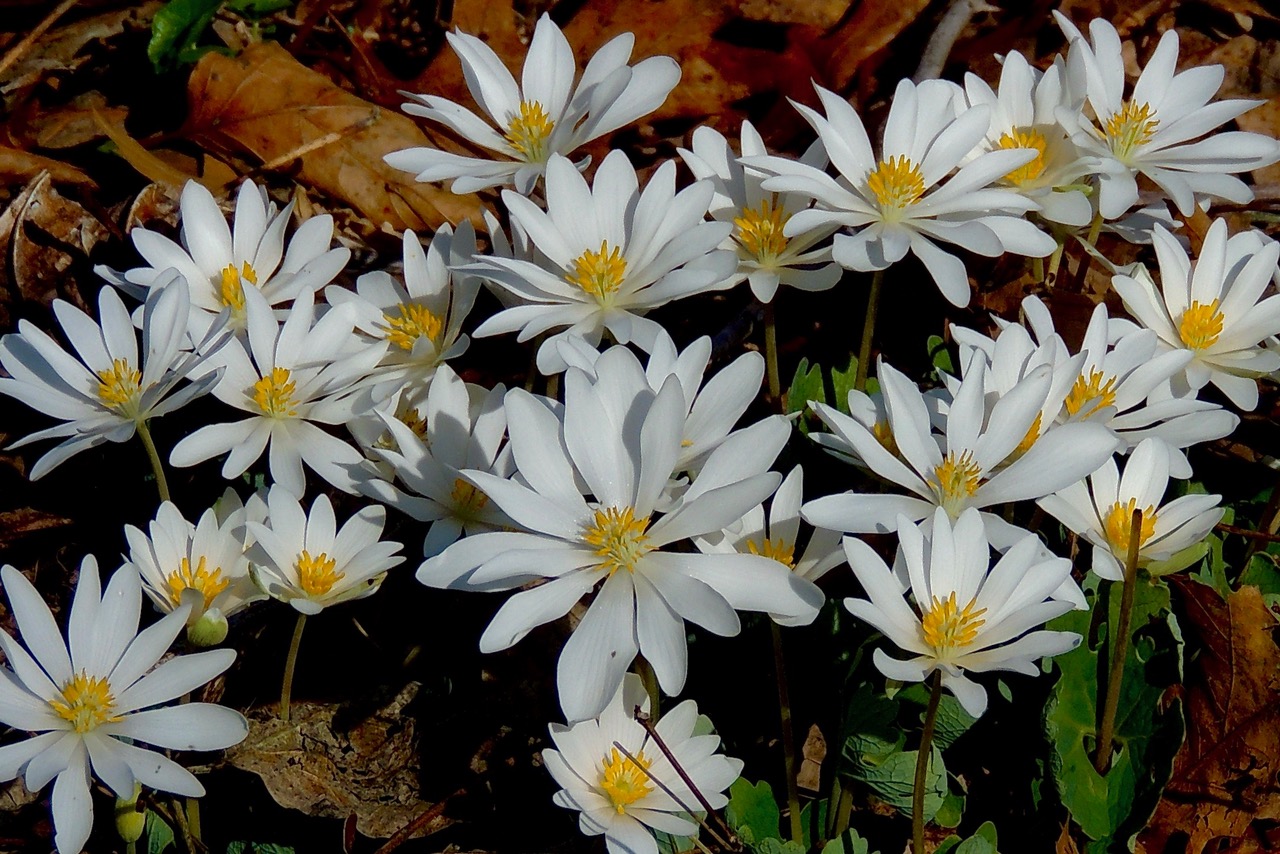
Bloodroot (Sanguinaria canadensis) gets its name from the reddish-orange sap found inside its underground rhizome. That dramatic “blood” is hidden beneath an otherwise delicate spring wildflower. Bloodroot is a spring ephemeral, emerging, flowering, and setting seed long before October rolls around. By learning the context behind its name, may you feel inspired to scan the forest floor in search of it next spring!

Boneset

While common boneset (Eupatorium perfoliatum) sounds like it belongs beside a graveyard, its story is actually rooted in traditional herbal use. According to a Doctrine of Signatures line of thinking, ingesting boneset will help heal broken bones.
Boneset is a native wetland and meadow plant with clusters of small white flowers that bloom late in the growing season. Its flowers are valuable to pollinators, making it an excellent example of how a plant with a macabre name can be an important contributor to a healthy ecosystem.
Skeleton Shrimp
If you think skeletons belong in the graveyard, think again! Skeleton shrimp (Paracaprella tenuis) are tiny marine amphipods found in the coastal waters and estuaries of the Chesapeake Bay in Virginia.
These bizarre little crustaceans look like something assembled from a handful of translucent bones. Their long, skinny bodies and grasping appendages allow them to cling to vegetation and other surfaces in the water. Spooky facts: Some skeleton shrimp females carry their developing young in a transparent brood pouch. And in some species, mating can have a particularly dark ending: females may kill males using a venomous claw.

Mummification in Miniature
No embalming fluid required: for an aphid, becoming a mummy is simply part of the life cycle of a parasitoid wasp. Aphid mummy wasps (Subfamily Aphidiinae) are tiny parasitoid wasps whose young develop inside aphids. The developing wasp eventually kills its host, leaving behind a hardened “mummy” of the aphid’s body. It’s a gruesome strategy, but also an important one. Parasitoid wasps are natural enemies of many insect species and play important roles in regulating insect populations.

Zombies are real
Perhaps the most unsettling story of all belongs to a tiny parasite. White-fingered mud crabs are native estuarine crabs found abundantly along Virginia’s tidal rivers and the Chesapeake Bay. They, and other mud crabs, can be infected by Loxothylacus panopaei, a parasitic barnacle sometimes described as a “zombie crab” parasite.
The parasite takes up residence on the crab and grows root-like structures inside it, eventually resulting in the crab’s castration. This effectively redirects the crab’s resources toward the parasite’s reproductive needs. Loxo even erupts through the abdomen of the crab (just like in the movie Alien) creating a mass on the crab’s underside that is pure parasite.
Science fiction, this is not.

The Eastern Hellbender
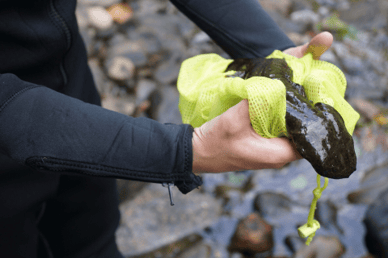
And then there’s the eastern hellbender (Cryptobranchus alleganiensis). With its flattened body, loose folds of skin, tiny eyes, and enormous size for a salamander, the hellbender looks like something that crawled out of a nightmare. Early settlers thought that the creature looked like it crawled out of hell and was “bent on returning.” Another theory is that its undulating, wrinkled skin was reminiscent of suffering souls and the tortures of hell.
Despite its name, however, this animal is no demon. Hellbenders are aquatic salamanders that depend on clean, cool, well-oxygenated streams and Virginia’s hellbender populations are primarily associated with western parts of the state rather than the urban habitats of Northern Virginia. Sadly, their population has been steadily declining, which can largely be attributed to the degradation of stream quality by the damming of rivers, water pollution, and siltation of streams.
Spiders of the Shadows
October is also a great time to appreciate spiders. Spiny orb-weavers such as the spined micrathena (Micrathena gracilis) have dramatic, crab-like bodies adorned with spikes and can create a faint buzzing or hissing sound by rubbing parts of their body near their book lungs when disturbed. Jumping spiders (Platycryptus undatus) use exceptional vision and a massive leap to pounce on prey, using a silk “dragline” as a safety anchor. Meanwhile, wolf spiders (Tigrosa georgicola) patiently patrol the ground for prey and fishing spiders (Dolomedes tenebrosus) actively roam to hunt by detecting surface vibrations on water or land.


The black widow spider (Latrodectus mactans) may be one of the most famous Halloween animals in North America. Its glossy black body and red hourglass marking have made it a cultural icon of danger. But black widows are generally shy and non-aggressive, preferring to avoid humans. Their venom is used primarily to subdue prey. Like many species on this list, the black widow’s reputation is much scarier than its typical behavior.

Although they may seem formidable due to their size, length of their legs, numerous eyes, and fang-bearing mouthparts, spiders are beneficial to keep around due to their natural regulation of insect populations. Aside from the native black widow (which rarely bites humans), nearly all spiders found in Northern Virginia homes and gardens are harmless to humans and nothing to fear.
And if you see a spider web sparkling with dew on an October morning, take a moment to look closely. What might initially appear frightening can be one of the most intricate pieces of art in nature. They should never be replaced by fake decorative webs, which can actually capture real insects.

Nature’s Shadow Sentinels
Death is often not the end of a story. Take the turkey vulture (Cathartes aura) and black vulture (Coragyps atratus), for example. With their dark plumage, bald head, and habit of feeding on carrion with scythe-like beaks, they may seem to personify the grim reaper. Yet vultures perform an essential ecological service.


Turkey Vulture in Front Royal, VA, 24 May 2026 (left), and Black Vulture in French Creek, WV, 12 August 2026 (right). Images by Laura Gilmore
By consuming dead animals, they help recycle nutrients and remove carcasses from the environment. Their stomach chemistry and immune systems allow them to consume food that would be dangerous to many other animals. As such, they neutralize dangerous pathogens and bacteria, preventing disease from spreading through the ecosystem. Rather than being symbols of death, vultures are just part of nature’s cleanup crew.
Quoth the Raven, “Nevermore”
Few birds have a stronger association with Halloween than the common raven (Corvus corax).

Ravens have featured prominently in folklore, mythology, and literature for centuries, often as symbols of mystery, intelligence, death, or prophecy. Although more strongly associated with western and mountainous parts of Virginia, common ravens are increasingly expanding their range into Northern Virginia. This suburban expansion was even documented for nesting pair on a Route 50 bridge abutment in Arlington.
Nature Is Stranger Than Fiction
Perhaps the best part of exploring nature’s Halloween cast is discovering that there is usually more to the story than meets the eye. A “dead man’s fingers” fungus is helping decompose wood. A “zombie” crab reveals the complexity of host-parasite relationships. A black widow is simply a predator carrying out its ecological role. A ghost pipe is part of a hidden fungal network. Even the plants and animals surrounded by centuries of folklore are ultimately connected to the same ecosystems we share.
Their names may spark our curiosity, but understanding builds our appreciation. Since observation is often the first step towards stewardship, pay special attention to any spooky sights when you take a walk through your local park, woodland, meadow, stream, or backyard this October. Then choose to look past the name, appearance, or the folklore to understand the full ecological story and interconnections underneath. Don’t let anyone convince you that ghosts, witches, zombies, and other spooky spectres aren’t real!
Inspiration and Further Reading:
Virginia Department of Wildlife Resources, List of Native and Naturalized Fauna of Virginia, May 2026.
Kynes, Sandra, Poisonous Plants and Fatal Fungi: The Lore and Lure of Deadly Botanicals. Llewellyn Publications, 2025.
Hirsch, Rebecca E., A Deathly Compendium of Poisonous Plants: Wicked Weeds and Sinister Seeds. Zest Books, Lerner Publishing Group, 2024.
Ventura, Varla A. Rotten Botany: Darkly Deceptive, Bizarrely Beautiful & Oddly Alluring Plants. New Page Books, 2026.
Rich, Colleen Kearney, “Zombie crab research and their effects on the Chesapeake Bay,” George Mason University website, 28 October 2021. Accessed 2 February 2026.
Discover more from Arlington Regional Master Naturalists
Subscribe to get the latest posts sent to your email.